Most business websites in Malaysia are expensive brochures. They describe the company, list some services, and then… nothing. A visitor reads, nods, and leaves — and the business never knows they were there. A lead-generation website does something different: it’s built to move each visitor toward one action, makes that action easy, and tracks whether it’s working so you can improve it. The gap between the two isn’t budget. It’s design intent. Here’s how to close it.
The short answer: what makes a website generate leads
A website generates leads when every page is built around one clear next step (usually an enquiry or a WhatsApp message), the path to that step is obvious and frictionless, and the whole thing is tracked so you can see what converts and fix what doesn’t. It’s not about more traffic or a prettier design — it’s about intent, structure, and measurement. A modest site built this way out-performs a beautiful one that gives visitors nothing to do.
Why most websites don’t generate leads
The common failures are predictable:
- No clear action. The site informs but never asks. Visitors have nowhere obvious to go next.
- Too many choices. A page offering ten things to click effectively offers none — the visitor freezes and leaves.
- Weak or hidden calls-to-action. A single “Contact Us” buried in the footer isn’t a conversion strategy.
- No proof. Nothing that tells a stranger why to trust this business over the competitor in the next tab.
- Slow and clunky on mobile. Most Malaysian traffic is on a phone; a site that’s awkward there loses people before they read a word.
- No tracking. The business can’t see how many enquiries the site produces, so it can’t tell what’s working — or that anything’s broken.
Fix these and the same traffic starts producing enquiries. That’s the whole game.
Is your website producing enquiries — or just sitting there? We build sites designed to generate leads, with tracking to prove it. Start your project →
The anatomy of a lead-generation website
Six things, working together:
1. A clear promise, fast. Within seconds, a visitor should understand what you do, who for, and why you. Vague taglines (“your trusted partner in excellence”) waste the most valuable moment on the page. Say something specific.
2. One primary action per page. Decide the single most important thing you want a visitor to do — usually “start an enquiry” or “WhatsApp us” — and make everything point at it. Secondary actions are fine, but one leads.
3. Calls-to-action that repeat. Don’t rely on a lone button. A strong CTA appears in the header, after key sections, and in a final band. A visitor should never have to scroll back to find how to contact you.
4. Proof that reduces risk. Real testimonials, named clients, case studies, results. A stranger deciding whether to trust you needs evidence, not adjectives. (Ours lives in our case studies — real shipped work, not stock photos.)
5. Friction removed from the ask. A ten-field form scares people off. Ask for what you genuinely need — name, contact, a line on the project — and no more. In Malaysia, a WhatsApp option matters: many buyers would rather message than fill a form, so give them both.
6. Speed and mobile. A fast, mobile-first site isn’t a nice-to-have — a slow page bleeds leads before they convert, and most of your visitors are on a phone.
The part almost everyone skips: tracking
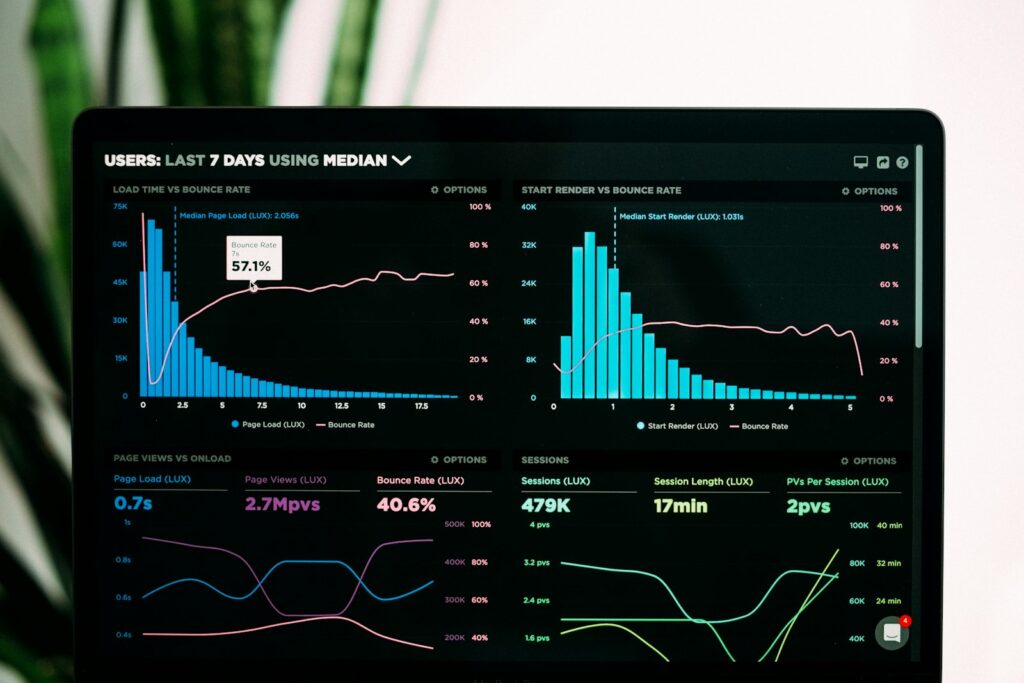
Here’s the difference between a website and a lead-generation system: measurement. If you can’t see how many enquiries the site produces, where they come from, and which pages convert, you’re flying blind — improving nothing, guessing at everything.
At minimum, set up:
- Conversion tracking on your form submissions and WhatsApp clicks (via GA4 and, ideally, Google Tag Manager).
- A thank-you page that fires the conversion, instead of an inline “message sent” — it’s cleaner to track.
- Source tracking (UTM parameters into hidden form fields) so every enquiry carries where it came from — search, ads, social, referral.
Do this, and you can finally answer the questions that matter: Is the site working? Which channel brings the best leads? What should we fix first? Without it, you’re paying for a website and hoping.
Feed the system: SEO and ads
A lead-generation website is the engine; traffic is the fuel. Two ways to supply it:
- SEO brings visitors who are already searching for what you do — the highest-intent traffic there is, and it compounds over time. (More in our guide to SEO vs AIO SEO.)
- Google Ads brings demand faster, while SEO builds — if the ads point at pages built to convert, not your homepage.
The mistake is treating these as separate from the website. When the site, SEO, and ads are built as one system, each reinforces the others — which is exactly what we did for Astute KL Sentral: a website structured for enquiries, SEO to earn visibility, and Google Ads pointed at matched pages, all feeding the same tracked enquiry pipeline.
Common mistakes to avoid
- Chasing traffic before fixing conversion. More visitors to a site that doesn’t convert just wastes more attention. Fix the site first.
- Prettier over clearer. A gorgeous site that doesn’t ask for the enquiry loses to a plain one that does.
- Burying contact. If getting in touch takes effort, most won’t bother.
- No tracking. You can’t improve what you don’t measure — and you can’t prove the site’s worth to yourself, either.
The bottom line
Turning your website into a lead-generation system is a decision, not a budget. Build every page around one clear action, remove the friction, prove you’re worth trusting, make it fast on mobile, and — above all — track it. Do that, and the site stops being a cost that sits there and starts being the thing that brings you work.
FAQ
What makes a website generate leads?
A clear next step on every page (usually an enquiry or WhatsApp message), an obvious and frictionless path to it, proof that builds trust, fast mobile performance, and conversion tracking to measure and improve results. Intent and structure matter more than budget or design polish.
Why isn’t my website getting enquiries?
Common reasons: no clear call-to-action, too many competing choices, weak proof, slow or clunky mobile experience, or no tracking so you can’t see what’s failing. Usually it’s a design-intent problem, not a traffic problem.
Should I use a contact form or WhatsApp?
Both. Many Malaysian buyers prefer to WhatsApp rather than fill a form, so offer both and let them choose. Keep the form short — ask only for what you genuinely need.
How do I track leads from my website?
Set up conversion tracking on form submissions and WhatsApp clicks (GA4 + Google Tag Manager), use a thank-you page to fire the conversion, and capture UTM parameters so every enquiry shows its source. Without tracking, you can’t tell what’s working.
Related articles
- What to Prepare Before Hiring a Web Agency (Malaysia)
- SEO vs AIO SEO: Getting Found on Google & AI Search
Related service / case study
→ Website Development in Malaysia · Contact · Astute KL Sentral case study